Digital Wedding Invitation Card Template: A Designer's Take
As someone who spends most of their life staring at stitch files and fabric swatches, I approach every new Digital Wedding Invitation Card Template with a specific set of questions. Will this translate well from a screen to a needle? Does the layout have the structural integrity to hold up under thread tension? While this product is marketed primarily as a printable or digital graphic for Canva, my mind immediately goes to how these Graphic Templates can serve as the foundation for tangible, embroidered goods. In the world of custom apparel and handmade products, the line between a digital asset and a physical embroidery project is often just a matter of creative interpretation and technical execution.
My first impression of this template collection is one of refined elegance. The mood it creates is sophisticated yet accessible, perfect for the modern couple who wants something personal without being overly ornate. Visually, the layouts are clean, with a strong emphasis on typography and balanced negative space. For an embroidery designer, this is gold. When you are planning a machine embroidery design, you need clarity. Busy backgrounds and cluttered details often turn into a muddy mess of thread once stitched. These templates, however, offer distinct shapes and clear thematic elements that could easily be adapted into a satin stitch monogram or a delicate running stitch border.
From Screen to Stitch: A Real-World Application
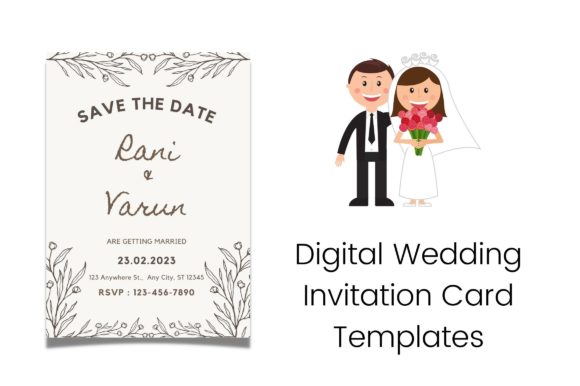
Let's talk about a real scenario. Imagine a client comes to your small shop asking for a unique wedding gift for their best friend. They want something more lasting than a paper invite. You pull up the Digital Wedding Invitation Card Template and see a beautiful floral crest with elegant script. Instead of just printing it, you decide to use this visual language to create a custom embroidered patch or a personalized tote bag.
The central motif of the template, which might be a wreath or a geometric frame in the original graphic, becomes the outline for your applique design. You can trace the major lines to create a cut-file for felt or twill, then use a dense fill stitch to add texture to the floral elements. Because the original Graphics are designed with balance in mind, the resulting embroidery feels intentional and high-end. It stops being just a "craft" and starts looking like boutique merchandise. This kind of adaptation is exactly what savvy Etsy sellers and craft business owners do to stand out. You aren't just selling a stitch-out; you are selling a cohesive brand experience derived from a premium template.
Consider the application on a heavy cotton tote bag design. The crisp lines of the template would look stunning when rendered in high-contrast thread colors against a natural canvas background. Or, picture this motif scaled down for a sweatshirt embroidery on the chest pocket. The simplicity of the template ensures that even at a smaller scale, the design remains legible. It proves that a well-structured digital template is more than just a file; it is a blueprint for a finished product that carries emotional weight.
Navigating Technical Challenges in Embroidery
However, translating a digital invitation template into thread requires a critical eye for technical limitations. Not every element in a Digital Wedding Invitation Card Template is ready for the hoop. As a reviewer, I have to point out where caution is needed. If the template features extremely fine hairline fonts or intricate, tiny details, these are red flags for embroidery. On textured fabrics like linen or waffle weave, those tiny details will get lost. Similarly, if you are working with stretchy fabric for baby embroidery items like onesies, dense areas from the original design concept might cause puckering if not managed correctly.
You must also consider the hoop size. Many invitation templates are designed for standard paper sizes, which are much larger than a typical 4x4 or 5x7 embroidery hoop. You will likely need to isolate specific elements—like the couple's initials or a single floral sprig—to make them fit. Attempting to stitch the entire layout of a full invitation card onto a garment is rarely successful unless you are doing a large back-panel design on a jacket. Furthermore, curved surfaces like caps present a challenge. The flat geometry of a digital template might distort when wrapped around a crown, so testing on a similar curve is essential before committing to the final custom apparel piece.
Another factor is stitch density. Digital graphics can handle infinite detail, but thread has physical volume. If you try to replicate a solid black block from the template using only satin stitch, you risk creating a stiff, cardboard-like patch that won't drape well. Breaking those large areas into smaller segments or switching to a fill stitch with appropriate underlay is crucial for maintaining the softness of the handmade product. Always test your adapted design on scrap fabric first. Check how the thread colors interact with the fabric texture, especially on dark fabrics where light threads might need an extra layer of underlay to pop.
Enhancing Brand Value and Customer Trust
Why go through the trouble of adapting a Digital Wedding Invitation Card Template for embroidery? The answer lies in perceived value. When a customer receives a personalized gift that echoes the aesthetic of their actual wedding invitations, it shows a level of thoughtfulness that mass-produced items cannot match. For small shop product lines, offering this kind of coordination builds immense customer trust. It positions you not just as a stitcher, but as a creative partner who understands their vision.
This approach also boosts your portfolio. Using these templates as inspiration allows you to create consistent design assets for your social media and printable mockup galleries. You can show potential clients how their wedding theme can extend beyond paper into textiles—think pillow covers for the reception, tea towels for the bridal shower, or even holiday embroidery ornaments for future anniversaries. The versatility of the template allows you to pitch multiple products from a single visual concept, increasing your average order value.
For the commercial embroidery professional, consistency is key. If a bride loves her invitation design, she is likely to love a matching embroidered robe for getting ready photos. By leveraging the existing aesthetic of the Digital Wedding Invitation Card Template, you reduce the design time while maximizing the emotional impact. It creates a seamless narrative between the digital invite they sent out and the physical keepsake they receive.
Final Verdict and Practical Notes
In conclusion, while the Digital Wedding Invitation Card Template is sold as a Canva-editable graphic, its potential for the embroidery community is significant. It serves as an excellent starting point for creating unique, personalized gifts and boutique items. However, success depends on your ability to interpret the graphic into a viable embroidery file.
Before you start stitching, keep these practical notes in mind:
- Test First: Always stitch a sample on scrap fabric similar to your final material to check for registration issues.
- Check Licensing: Since this is a third-party template, confirm the license terms regarding commercial use if you plan to sell the finished embroidered items or digitized versions.
- Simplify Details: Be prepared to simplify tiny text or complex shading that doesn't translate well to thread.
- Stabilizer Selection: Choose the right stabilizer for your fabric type to prevent distortion, especially if the design has dense areas.
- Color Contrast: Ensure your thread choices provide enough contrast against the fabric, particularly if adapting light-colored template elements onto dark garments.
If you are an apparel decorator or a creative entrepreneur looking to expand your offerings, this template is a solid resource. It provides the visual structure you need to create meaningful, high-quality personalized gifts that resonate with customers. Just remember, the magic happens when you take that digital perfection and give it the human touch of needle and thread.