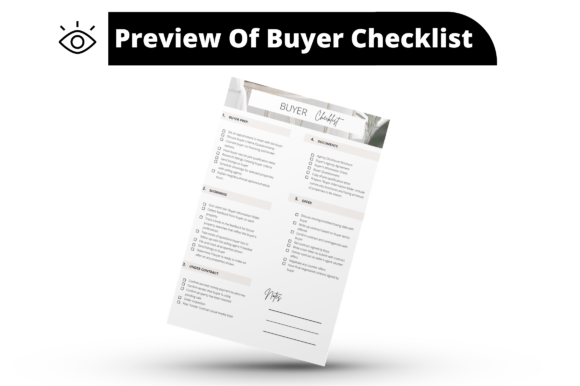
Buyer Checklist Template Review
As a designer and embroidery product reviewer, I often find myself evaluating digital assets for their real-world usability. The Buyer Checklist Template caught my attention not just for its practicality but for how it could be adapted into various embroidery projects. Let’s dive into what this design offers and how it might fit into your creative workflow.
First Impressions: A Clean and Professional Layout
The Buyer Checklist Template immediately presents a sense of organization and clarity. Its layout is straightforward, with clearly defined sections that make it easy to navigate. The design uses a minimalist approach, which is great for readability but also leaves room for customization. The visual personality leans toward professionalism, making it suitable for both personal and commercial use.
From an embroidery perspective, the template’s structure suggests it could be used as a base for printable mockups or as a reference when designing custom apparel. Its clean lines and lack of overly intricate details mean it can be easily adapted to different fabric types and embroidery techniques.
Real-Life Embroidery Use Cases
Imagine you're working on a custom embroidered tote bag for a client. The Buyer Checklist Template could serve as a guide for what to include in the final design—like ensuring all necessary elements are present before stitching. It could also act as a reference for clients, helping them understand the process and expectations.
For a sweatshirt embroidery project, the template’s simplicity allows it to be scaled up or down without losing clarity. It could be used as a backdrop for a more detailed design or as a standalone element on a cap or apron. The template’s versatility makes it a good fit for small shop products, Etsy listings, and craft fair items.
In the case of baby items, such as onesies or blankets, the template could be modified to include personalized details like names or dates. Its clean look would pair well with soft fabrics and gentle stitching techniques like satin stitch or fill stitch.
Where to Be Cautious
While the Buyer Checklist Template is generally user-friendly, there are a few areas where care is needed. For instance, if you're planning to use it on small hoop sizes, you may need to adjust the design to ensure all elements are visible and properly stitched. Thin or stretchy fabrics could also pose challenges, especially if the design includes dense stitch areas or intricate details.
On dark fabrics, the contrast between the design and the background becomes crucial. If the template relies on light-colored thread, you’ll want to test it on a dark material to ensure visibility. Similarly, if you’re working on a curved surface like a cap, the design’s corners and edges may require extra attention to maintain shape and clarity.
Impact on Visual Appeal and Customer Trust
The Buyer Checklist Template has the potential to enhance the visual appeal of your finished product, especially when used in conjunction with other design elements. Its clean aesthetic can elevate the overall look of a handmade product or personalized gift, making it more appealing to customers.
Stitching clarity is another factor to consider. If the design includes tiny lettering or fine details, you’ll need to ensure that the stitch density is appropriate for the fabric type. Too much density can cause puckering, while too little can result in a weak or incomplete look.
For small business owners and Etsy sellers, the template can help maintain brand consistency across different products. It also adds a layer of professionalism, which can increase customer trust and engagement. When used effectively, it can even improve the giftability of your products by providing a clear and organized presentation.
Practical Designer Notes
Before committing to any embroidery project, I always recommend testing the design on scrap fabric. This helps identify any issues with stitch density, thread color contrast, or stabilizer requirements. For the Buyer Checklist Template, this step is especially important if you plan to use it on textured or stretchy fabrics.
When working with digital embroidery files, it’s essential to confirm that the design works for both personal and commercial use. While the template appears to be editable in Canva, you should double-check the licensing terms before selling finished items or digital products.
Another tip is to review the design in black and white mockups. This helps assess how it will look on different fabric backgrounds. If the template is intended for use on light or dark materials, testing it in both scenarios can prevent unexpected results.
Final Thoughts: A Useful Tool for Creative Entrepreneurs
The Buyer Checklist Template is a solid addition to any designer’s toolkit, especially for those involved in custom apparel, personalized gifts, or small business merchandise. Its clean layout and professional feel make it adaptable to a wide range of embroidery projects.
Whether you're an embroidery designer, a craft business owner, or a digital product seller, this template offers practical value. Just remember to test it thoroughly and consider the specific needs of your project before finalizing the design.